
Are your business mileage records audit-ready?
Vehicle mileage register and full VAT deduction (VAT-26)
Accurate mileage records are essential for tax deductions and expense claims. Learn how Aroute automates documentation so your records are always complete.
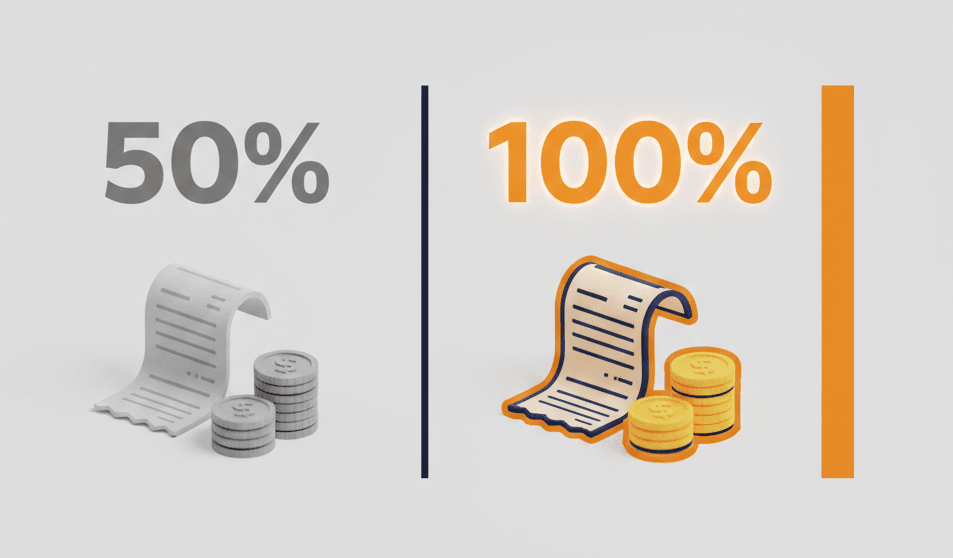
Why accurate records matter
How you document business vehicle use can directly affect your tax deductions.
Vehicle used for business and personal purposes
- Vehicle purchase or lease
- Fuel
- Service and repairs
- Insurance
Vehicle used exclusively for business purposes
- Vehicle purchase or lease
- Fuel
- Service and repairs
- Insurance
To maximise tax deductions on a business vehicle, accurate documentation of exclusive business use is essential.
Three pillars of audit-ready documentation
Complete business vehicle documentation typically requires three elements:
Accurate Trip Records
Ongoing record of every business trip - the foundation of audit-ready documentation.
Vehicle Mileage Log
Structured record of every business trip containing key data:
- Trip date and time
- Route (from → to)
- Trip purpose
- Distance traveled
- Odometer reading before and after
Internal Usage Policy
Company document defining vehicle usage rules and driver responsibilities.
In most jurisdictions, the burden of proof is on the company. Tax authorities may request documentation at any time.
The challenge: keeping records
Manual recording of all trips is time-consuming and error-prone, especially in companies with multiple vehicles and drivers.
Every trip should be documented with the following data:
- •Date, route, purpose, distance of every trip
- •Odometer reading before and after each trip
- •Storing documentation per local retention requirements
- •Records available on demand
Automatic vehicle mileage records
Aroute automates record-keeping so your documentation is always complete:
- Automatic recording with date and time
- Exact GPS route with start/end addresses
- Distance and trip purpose
- Odometer updated automatically
- PDF/Excel export in standard format
Benefits:
- Time savings - recording runs in background
- Fewer errors and no gaps in records
- Data ready to present at any time
Comparison: manual vs automatic records
| Aspect | Manual records | Aroute |
|---|---|---|
| Time per entry | 5-10 min / trip | 0 min (automatic) |
| Route accuracy | Approximate | Precise (GPS) |
| Error risk | High | Minimal |
| Odometer | Manual | Updated automatically |
| Audit readiness | Depends on consistency | Always ready |
| Monthly report | 1-2 hours | 2 minutes (export) |
FAQ about mileage documentation
Yes. Every vehicle used exclusively for business must be reported on the VAT-26 form. The VAT-26 information must be filed by the 25th day of the month following the month in which the first expense related to the vehicle was incurred, and no later than the day you submit your VAT records (the JPK_VAT file).
Yes, provided it contains all elements required by article 86a of the Polish VAT Act: date, route, purpose, distance, odometer reading and driver details. Autokilometry generates reports in a format compliant with these requirements.
Autokilometry automatically detects gaps in the record - it compares odometer readings between trips and alerts you to undocumented mileage. Missing entries can be added manually from the dashboard.
No, there is no such legal requirement - the mileage log for private vehicles only needs a list of trips. GPS simplifies the process and reduces the risk of errors.
Documentation related to VAT deductions must be kept for 5 years from the end of the calendar year in which the tax payment deadline fell.
Summary
Audit-ready business vehicle documentation requires:
- Keeping accurate trip records
- Maintaining detailed vehicle mileage logs
- Having an internal usage policy
Aroute helps businesses maintain accurate mileage records, making it easier to prepare documentation for tax and audit purposes.
This page is for informational purposes and does not constitute legal or tax advice. For tax matters, consult a qualified accountant or tax advisor in your jurisdiction.